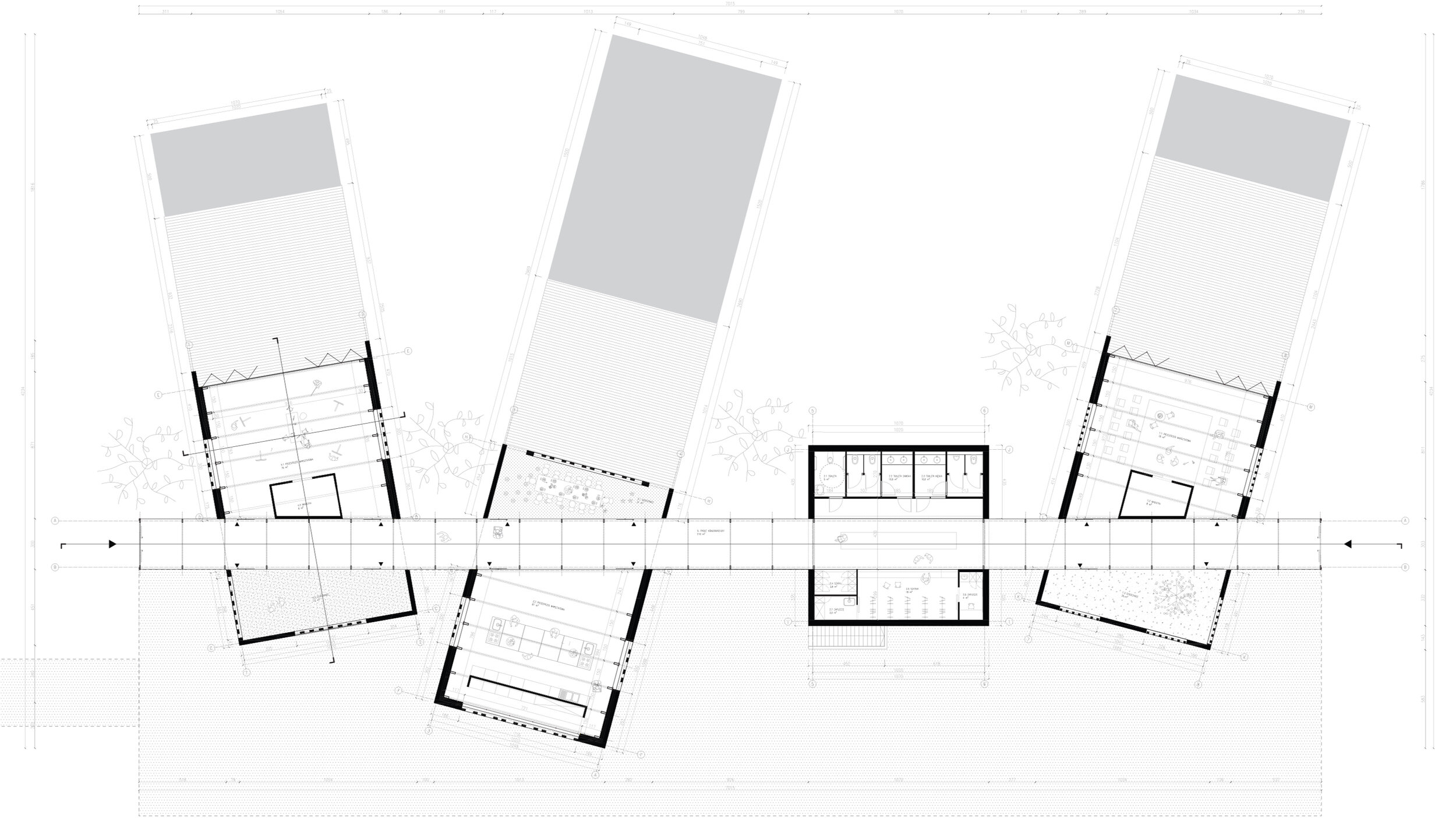
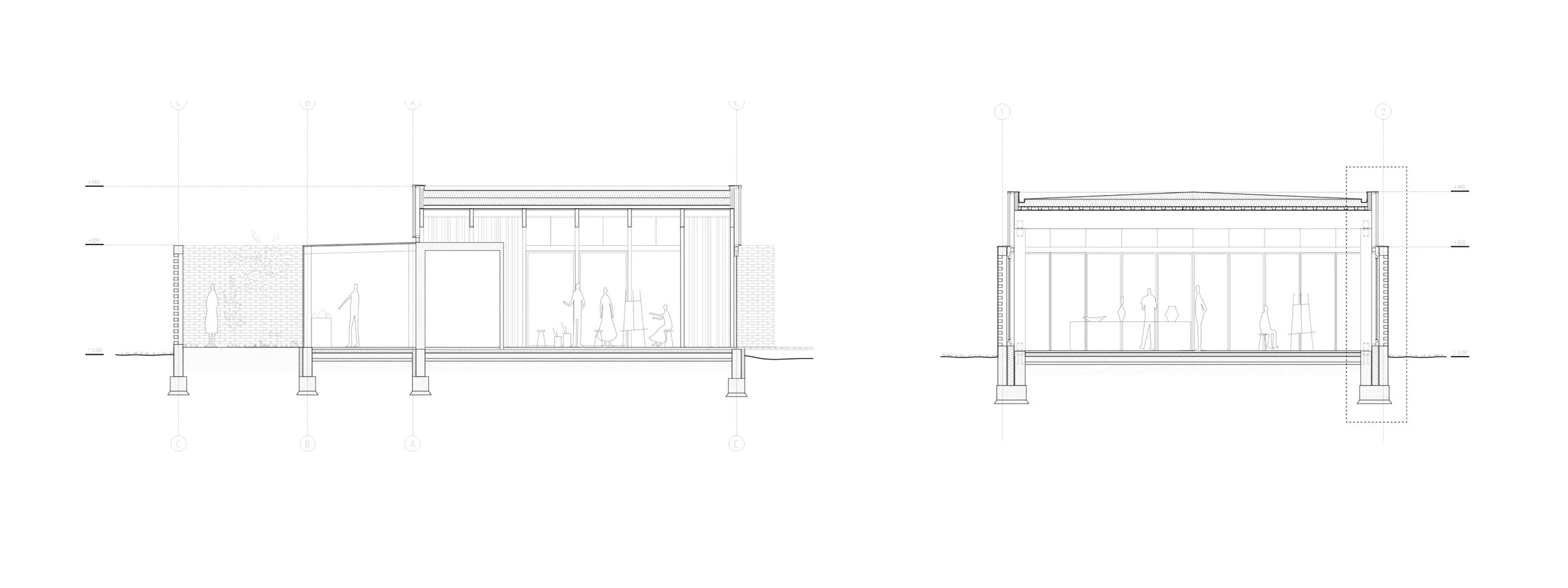
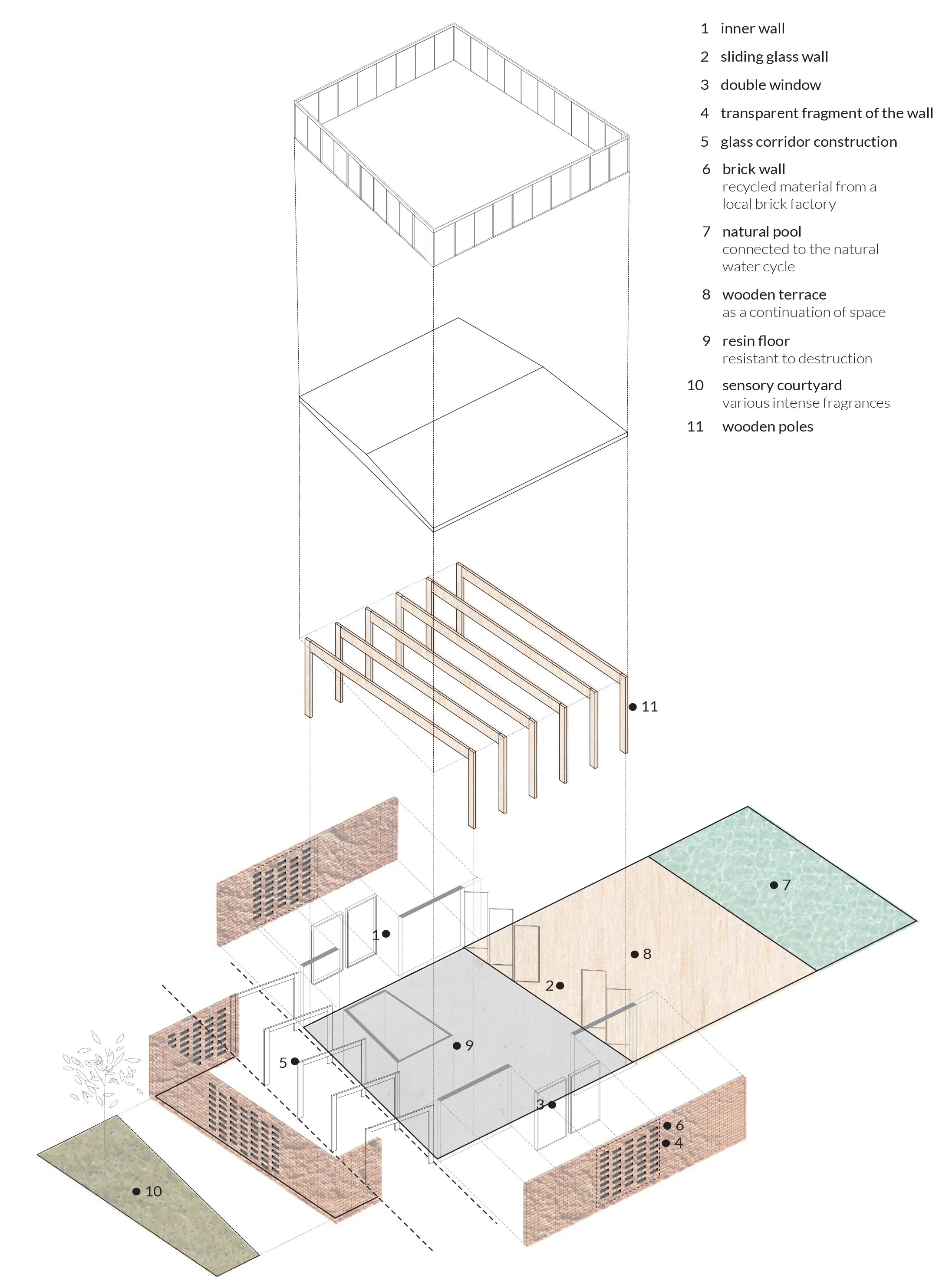
The Workshop Center next to The Special Educational Facility for Blind Children
Owinska, Poland
2017
Bachelor Thesis
The University of Fine Arts in Poznan
supervisor: Eugeniusz Skrzypczak
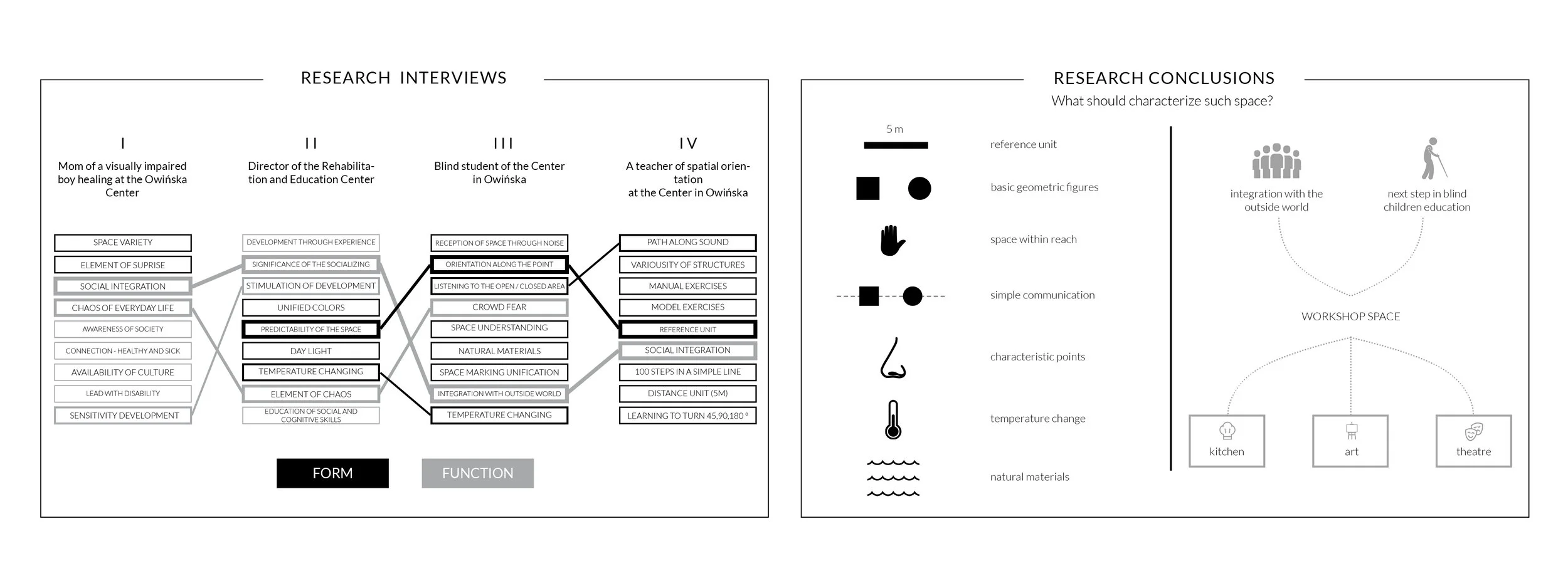
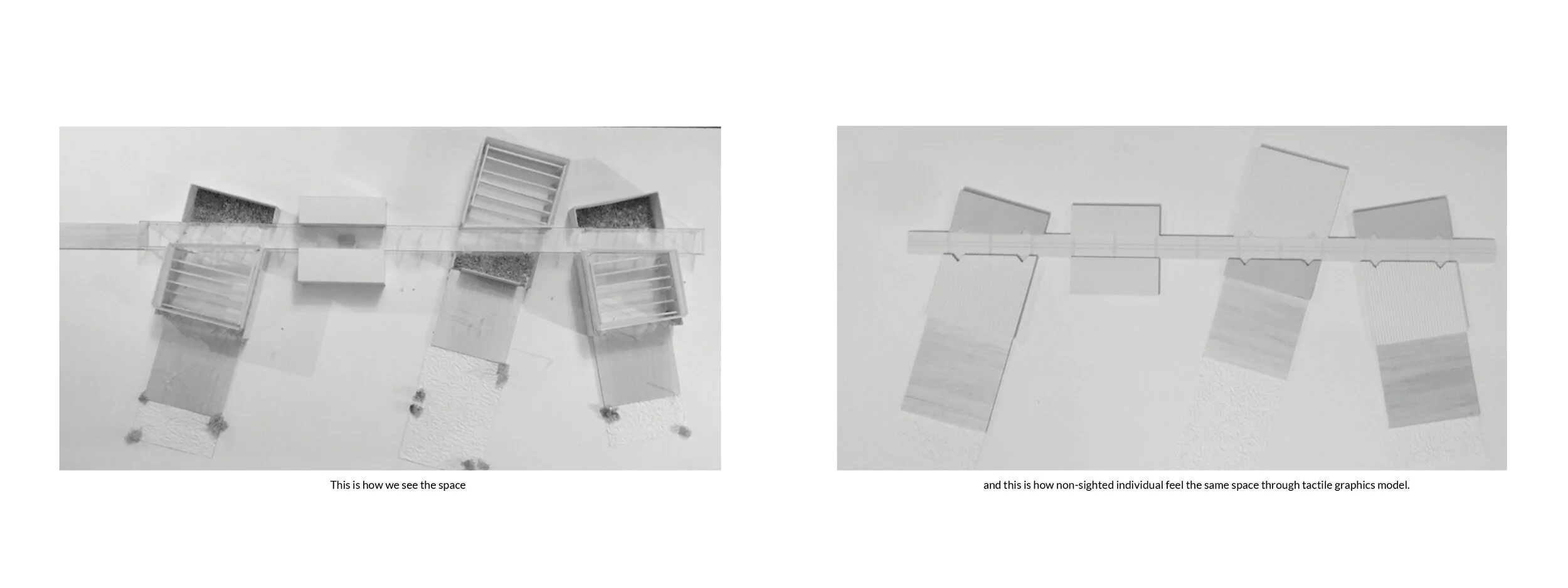
Removing sight from the suit of a person's principle perceptive senses two crucial and interrelated challenges. First of all, the non-sighted individual can't comprehend the space in an instant. Second of all, the non-sighted individual can't build an understanding of the space from a distance.
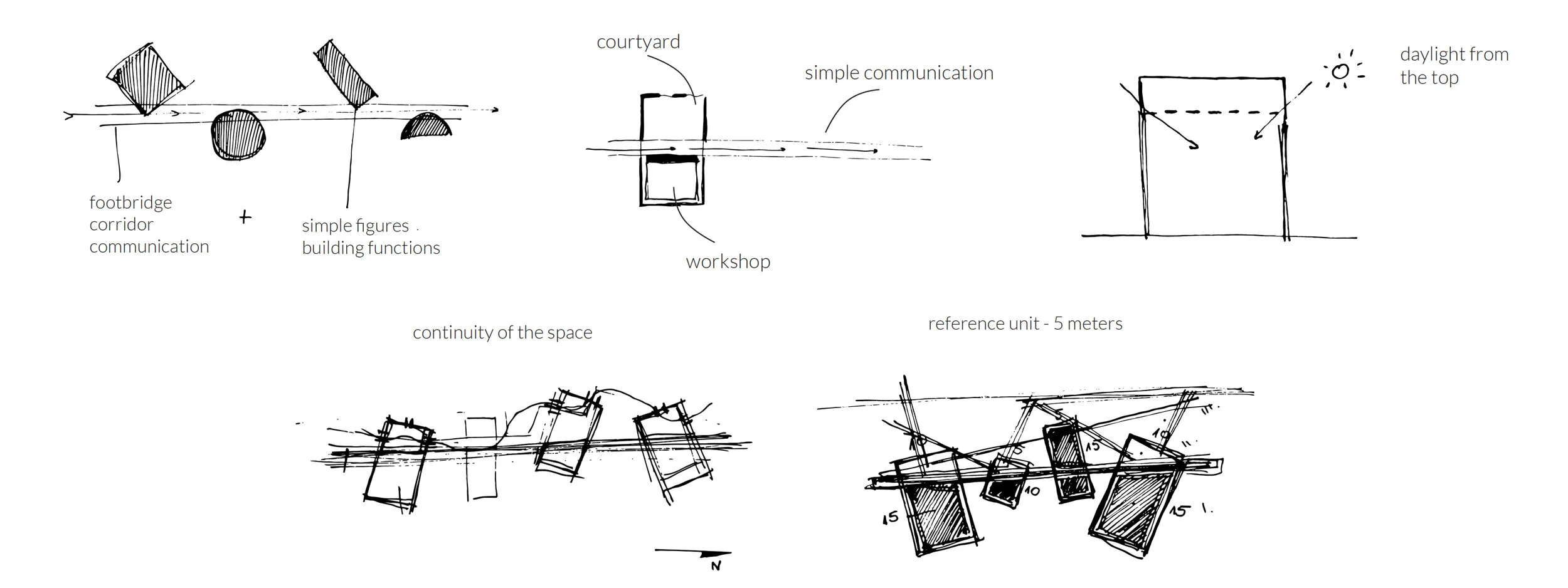
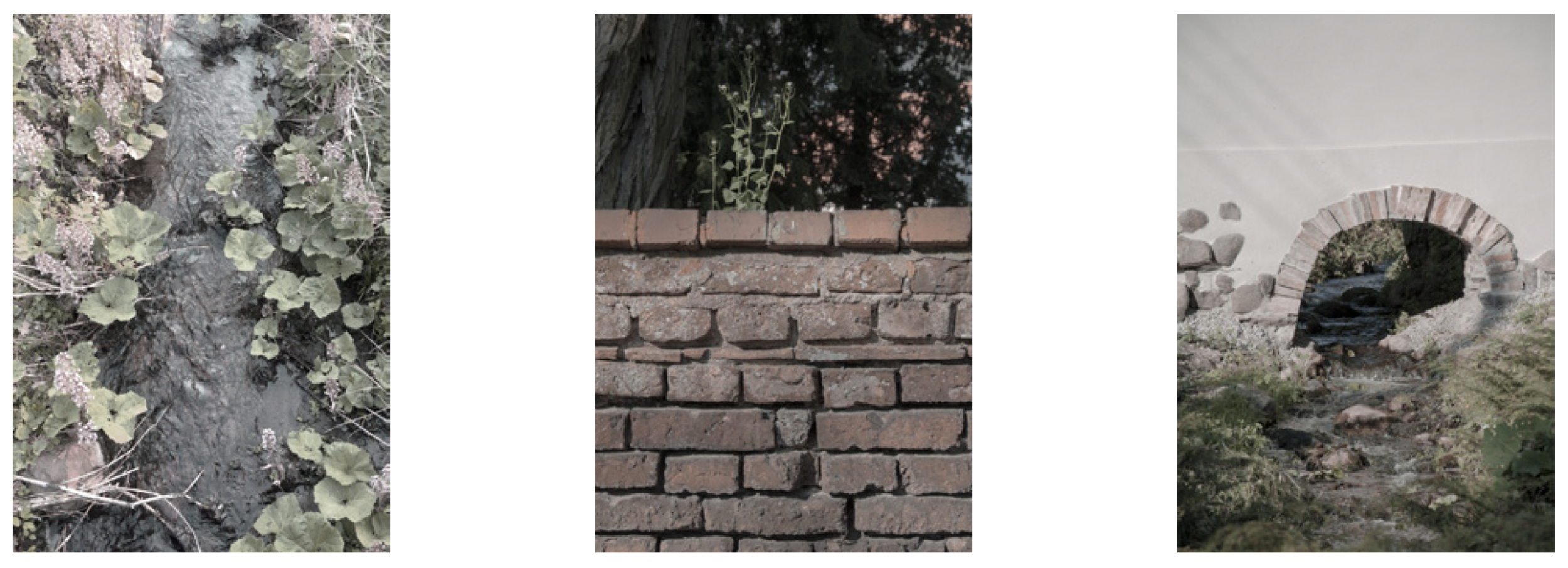
For a blind person to feel the surrounding space, he must have an unspoiled possibility to create this space's concept by hearing, touch, and smell. This process is based on constantly receiving feedback that the surroundings send. The imagination is provided with the reflection of the impulses. The user (of the space) must have the possibility to use his hands and the whole body to understand the distance, variety of textures in the materials, flooring systems, and echo.
In contrast to the other art forms, architecture consists of the features that connect the person to the surrounding world. Body and senses are instruments by which the unit interacts with the space. When we notice how the blind person understands the area through the nonvisual impulses, we can wonder how we are supposed to create the intuitive space for such a person. The primary purpose for the architects during the design process for blind people should be to create "spatial events" for the users.